ToL 2.25
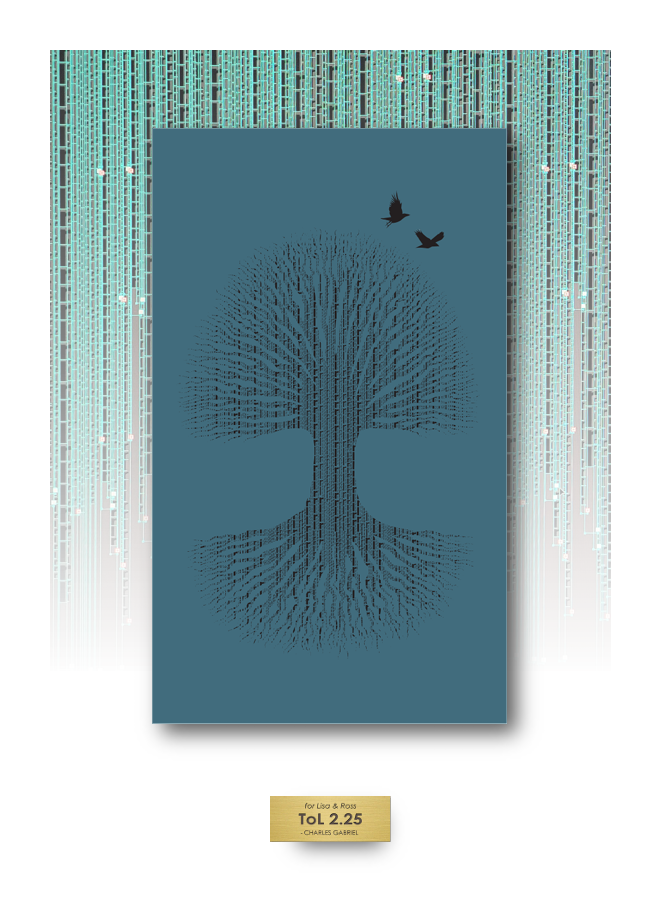
CLIENT BRIEF: “ A Tree-of-Life with 2 ravens “
CONCEPT:
My take on the Tree-of-Life is as a metaphor for connection, both through lineage and by choice. Ancestral roots to familial branches etc. Historically, analogue connections – built in the physical space.
But in this digital era – almost overnight, interconnections can reach so much further.
Connections, once ‘rooted’ entirely in tactile landscapes, now ‘branch’ virtually through an ever-evolving digital ecosystem.
An ecosystem that tends also to reach back…
It is with this in mind that the design for ToL2.25 developed:
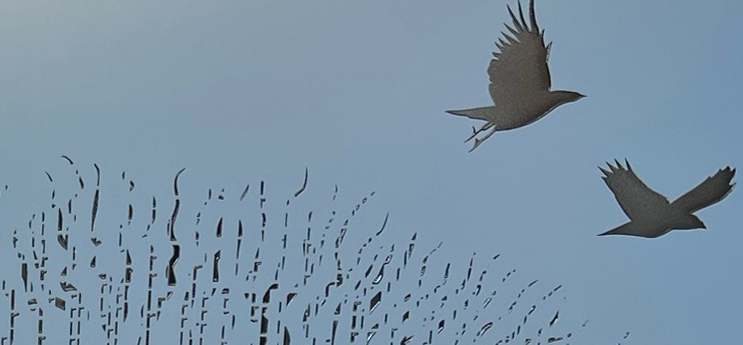
ORIGIN OF ToL2.25:
I love the potential baked into sci-fi. Add a dash of social commentary, sprinkle it through a cautionary near-future, and serve with ‘ a little bit of history repeating ‘. Yum.
As my awareness grew that data had become the clay for social modelling, one vision that embraced the nascent tech-reality, for me – as a world shaped absolutely by algorithm – was film gem, “The Matrix©”.
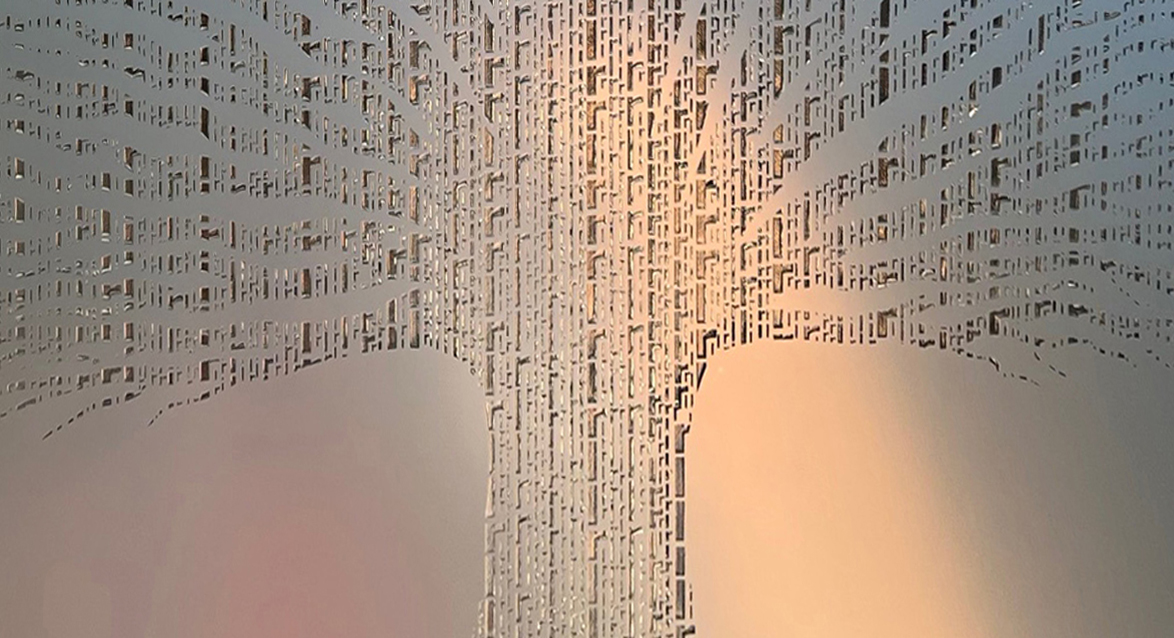
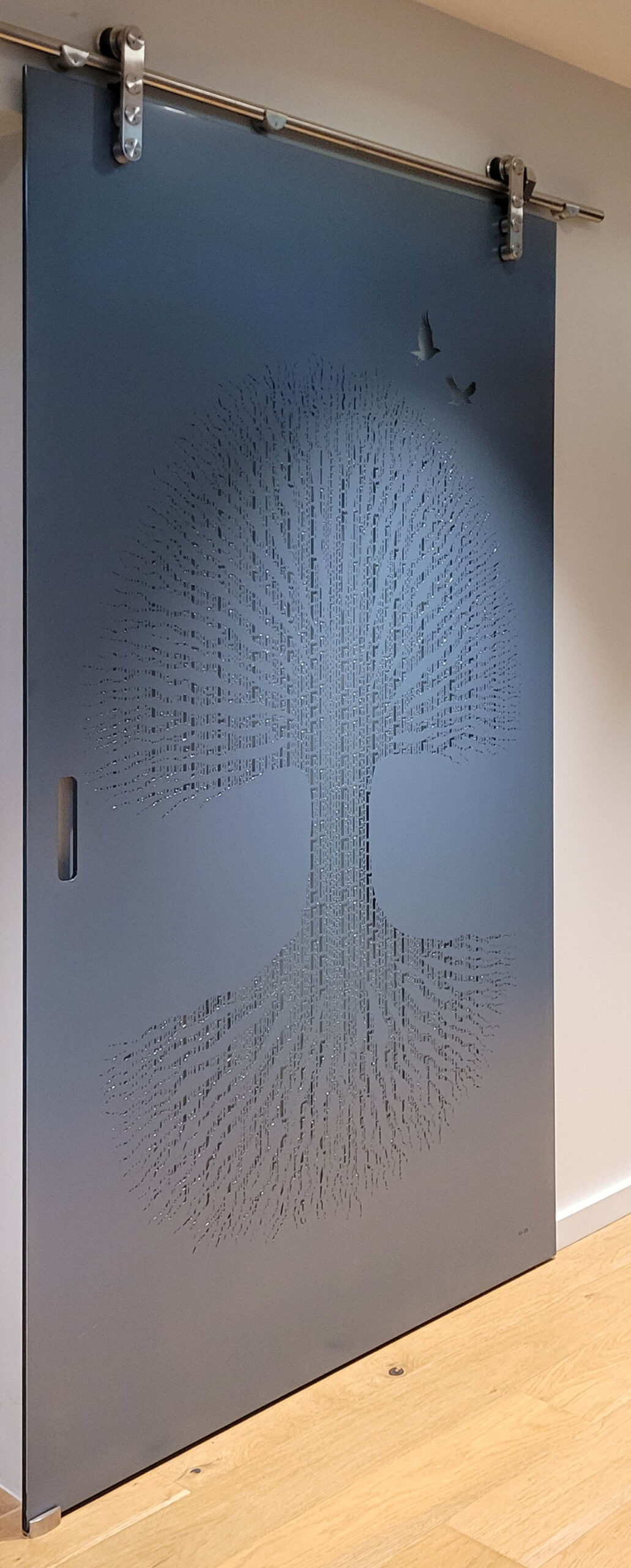
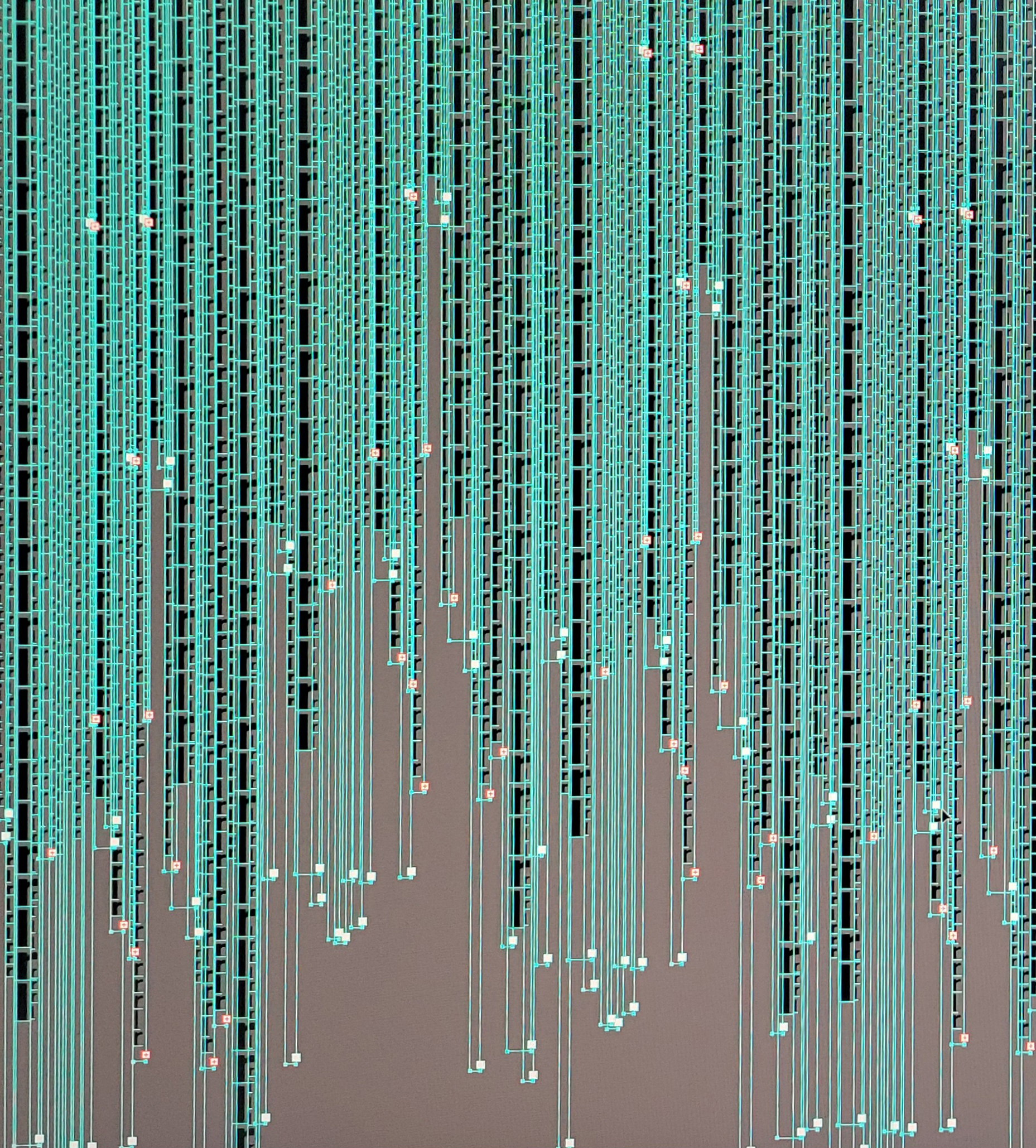
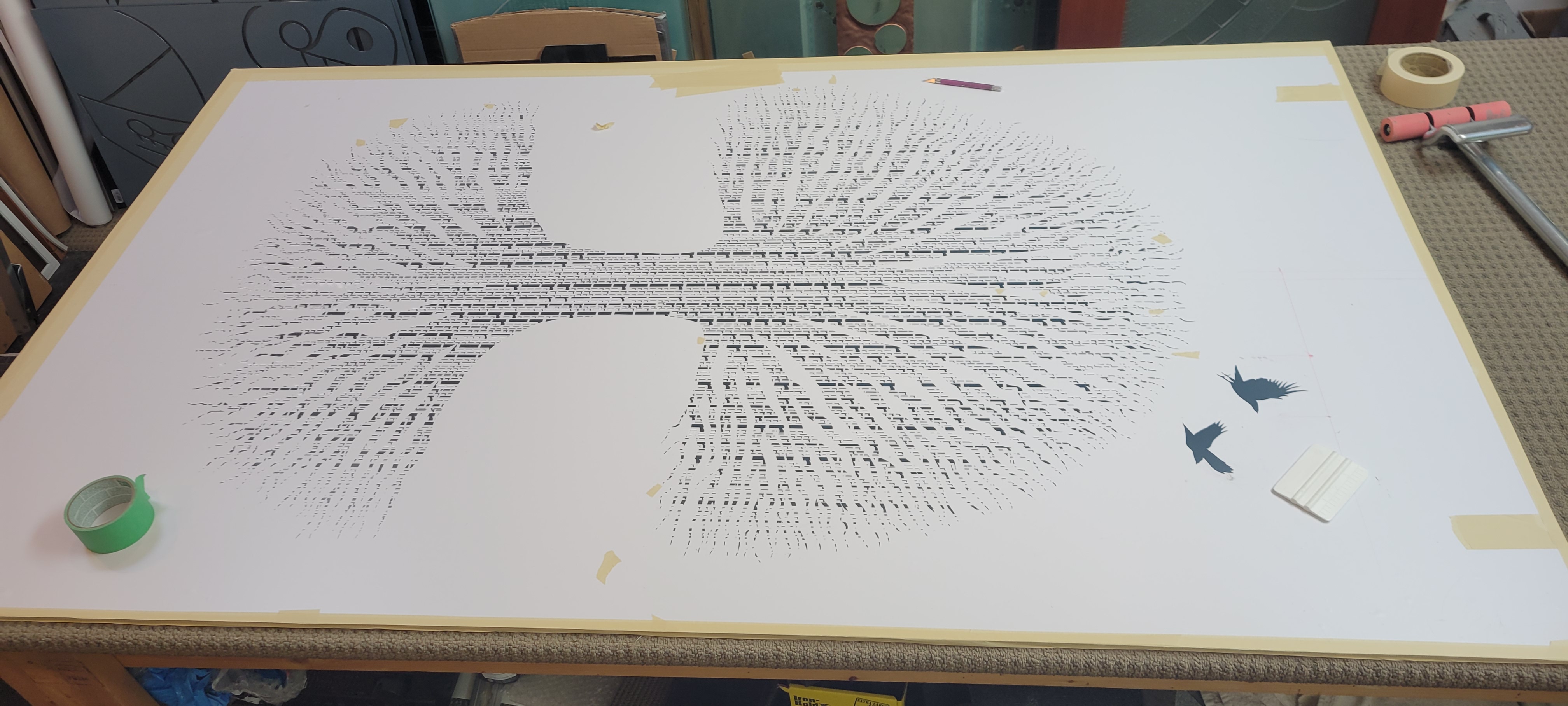
Riffing on that ‘pre-Y2K’ conceit of an existence we could either accept with relative ease, or question with increasing difficulty, ToL 2.25 renders this symbol of human lineage, The Tree -of-Life, as a digitized construct written entirely in binary code ( – running vertically ala The Matrix©)
In this hyper-personalized case, the 1s and 0s are replaced by lower case “l”s & “r”s.
(The ravens, though, ‘are real’… ;-p )
I could bang on about correlations to our reality 25yrs later but let’s save that chat for the ‘real world’.
-C
BUILD:
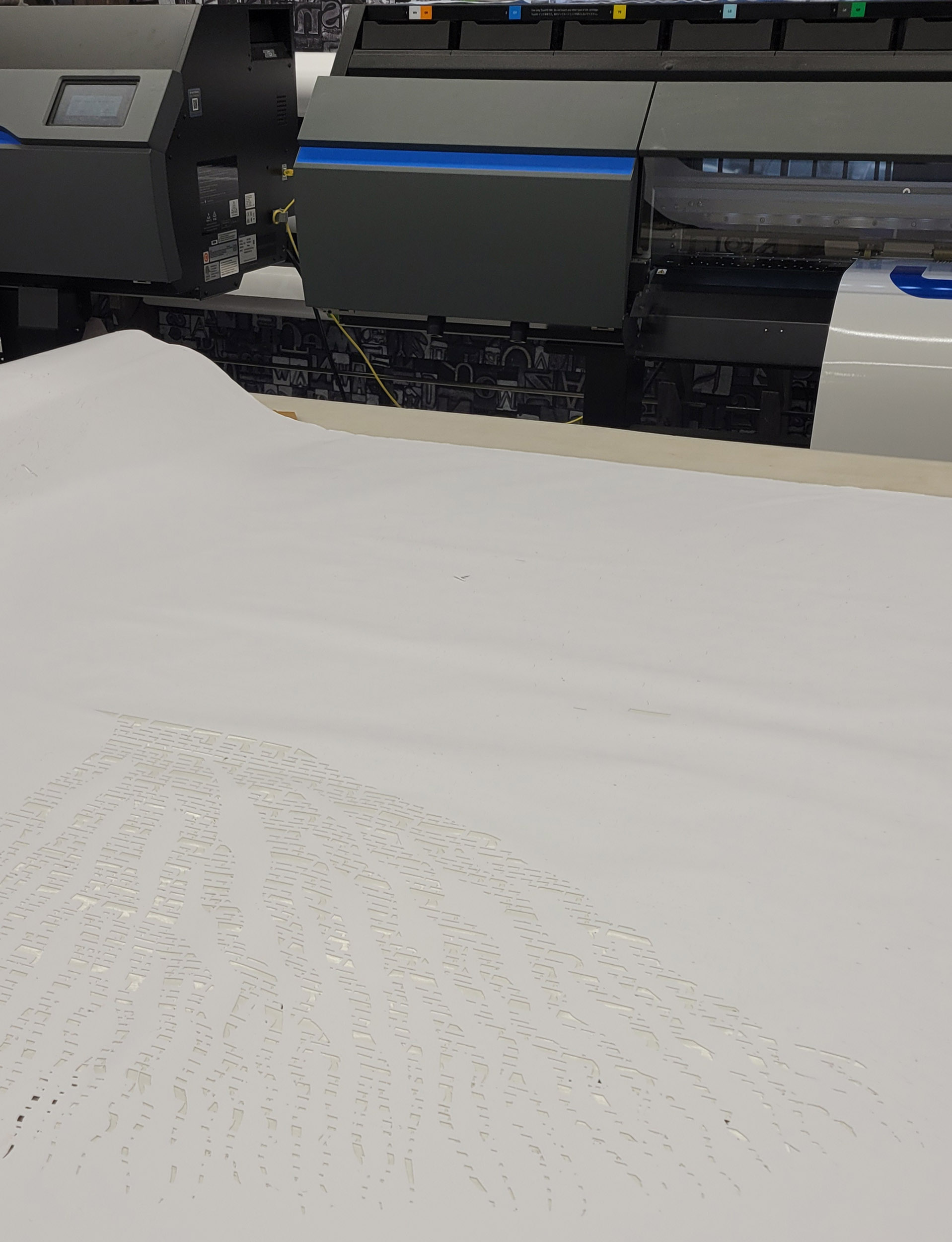
Staying on point with the build of this design I shifted from pencil to computer early in the process. (Several versions of tree shapes and text-flow ensued…)
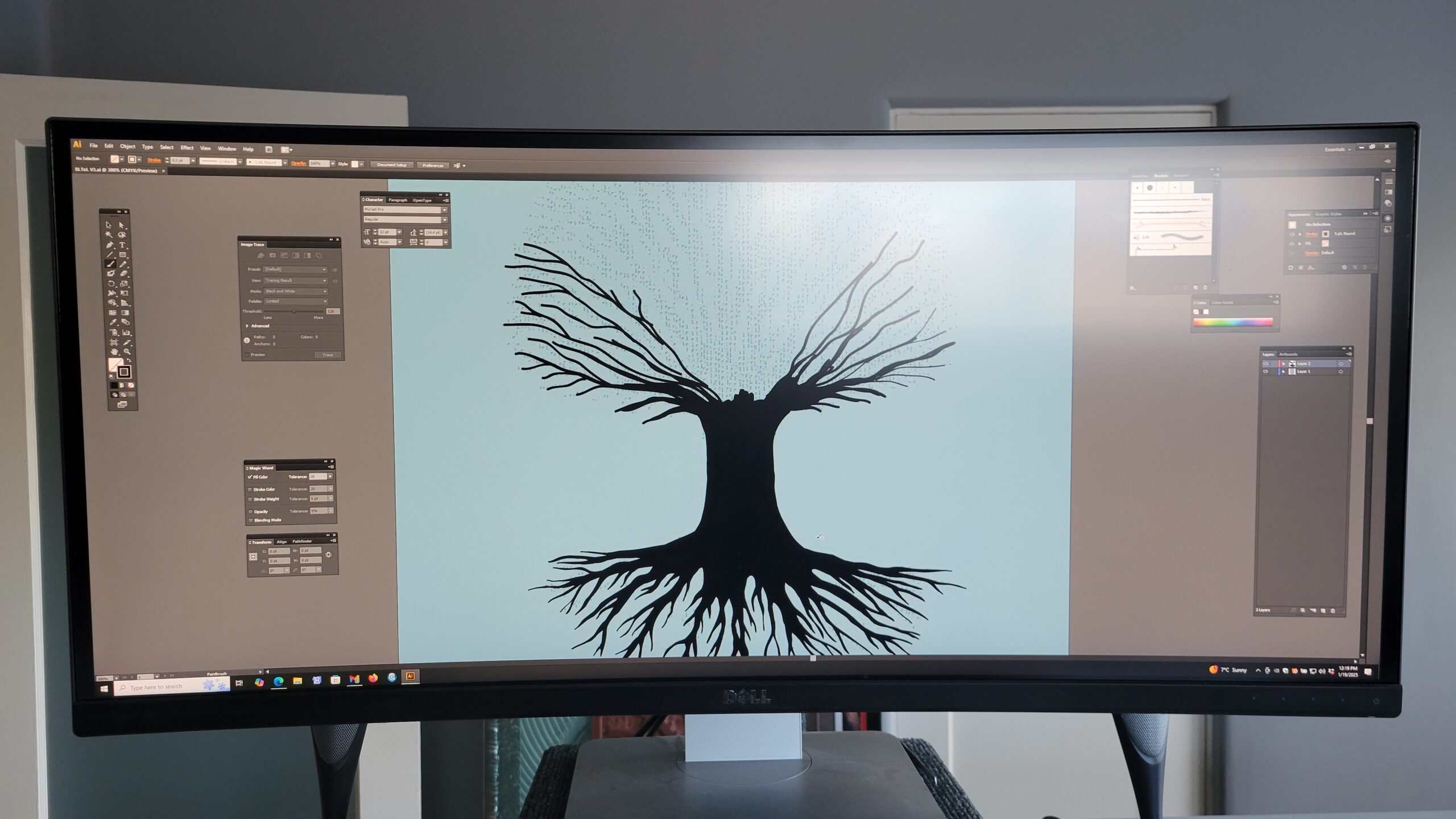
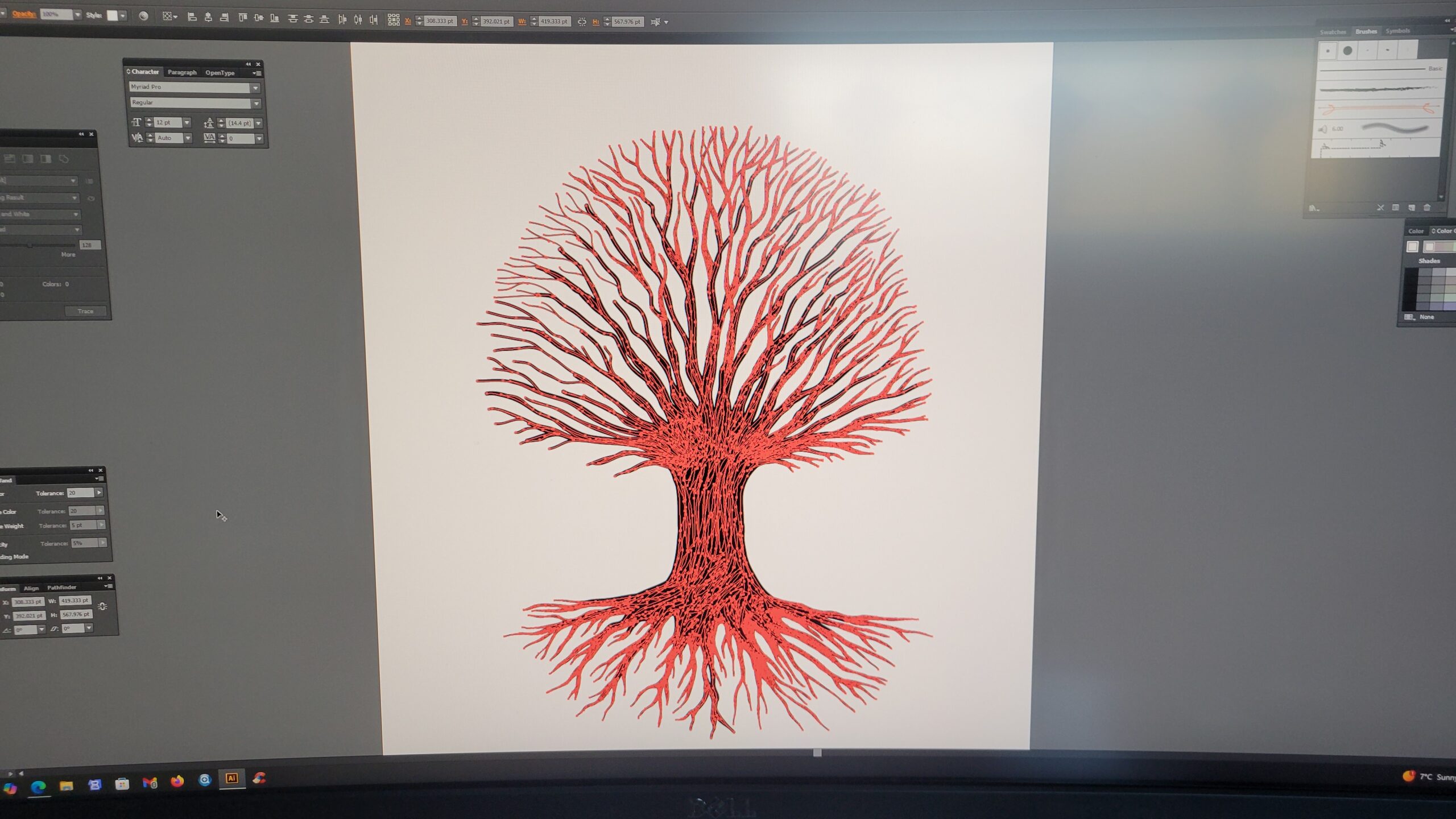
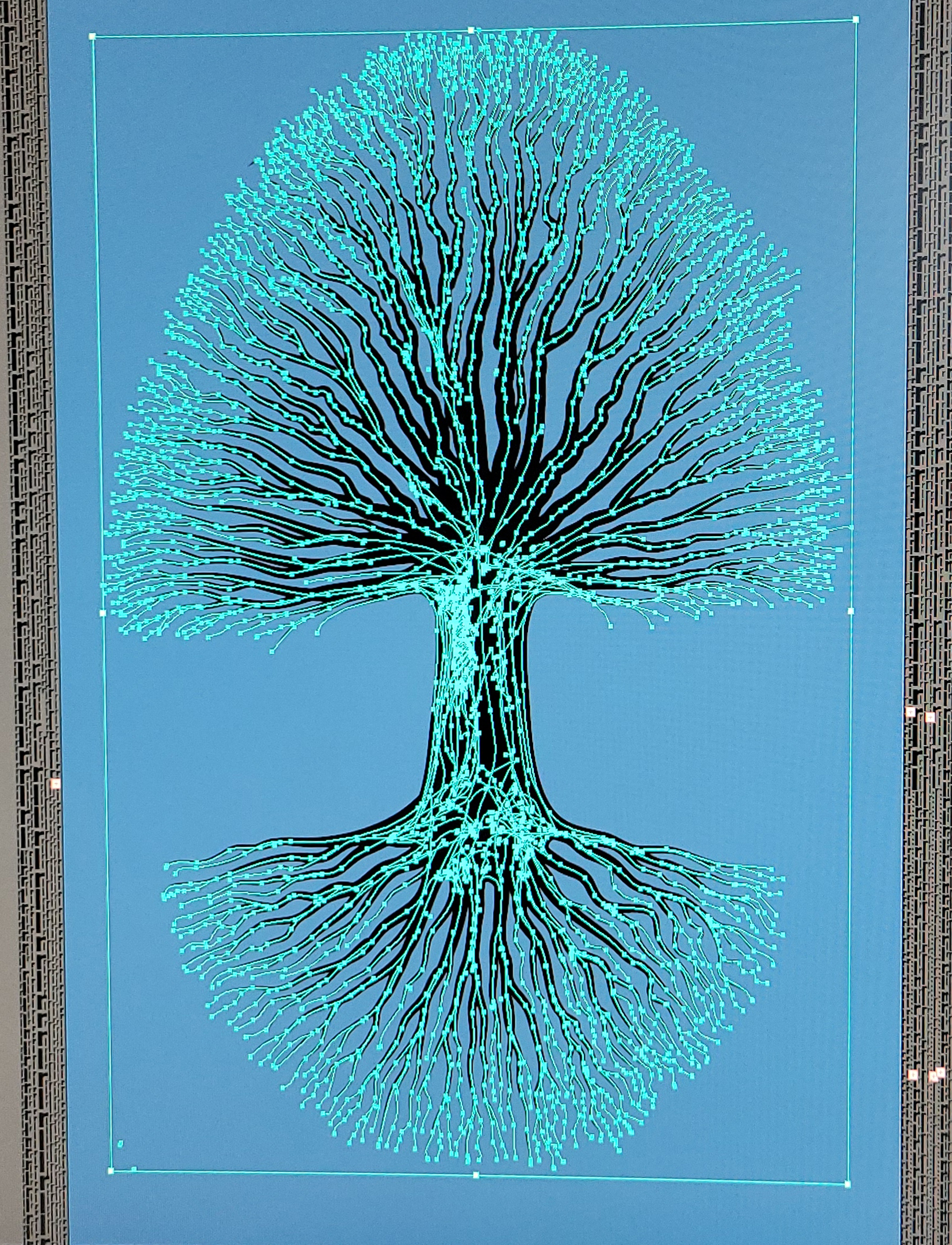
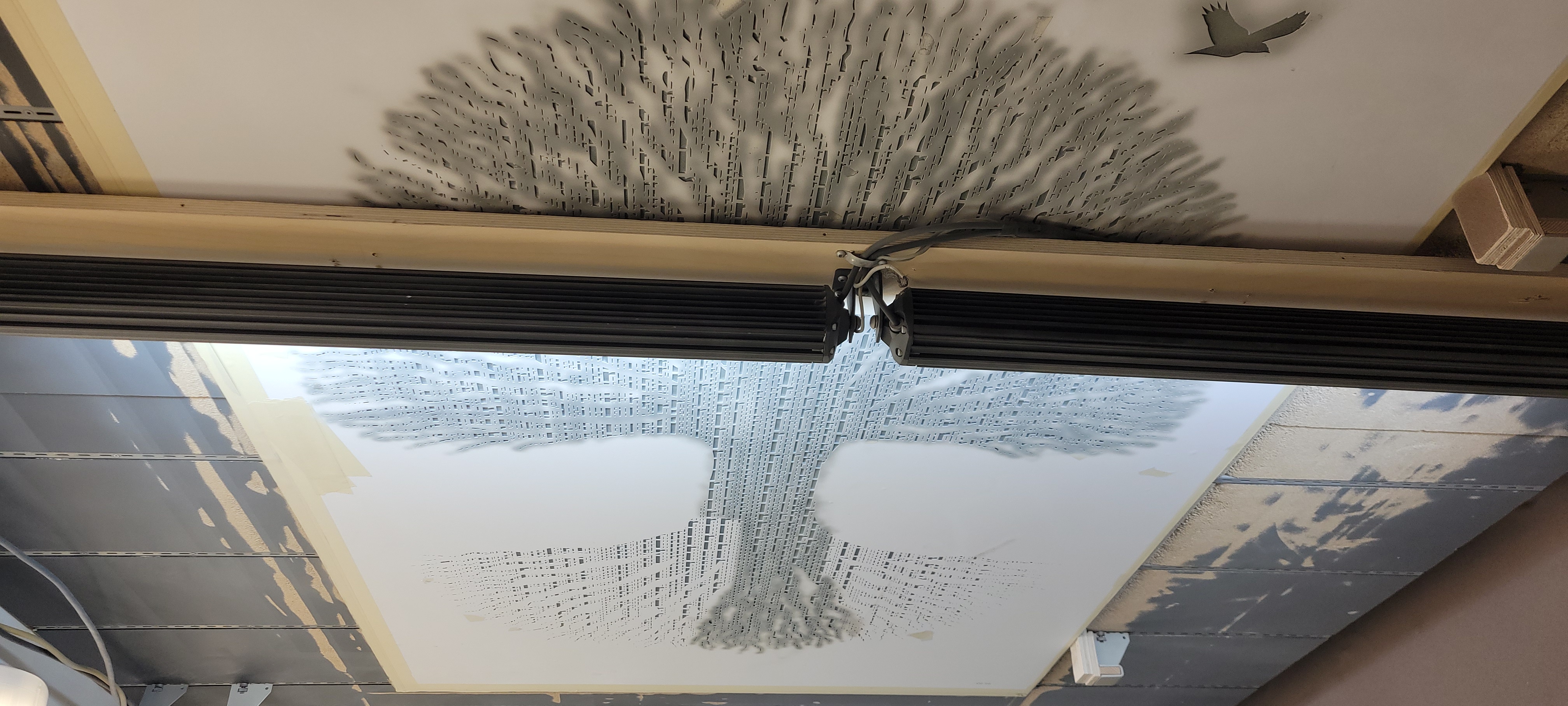
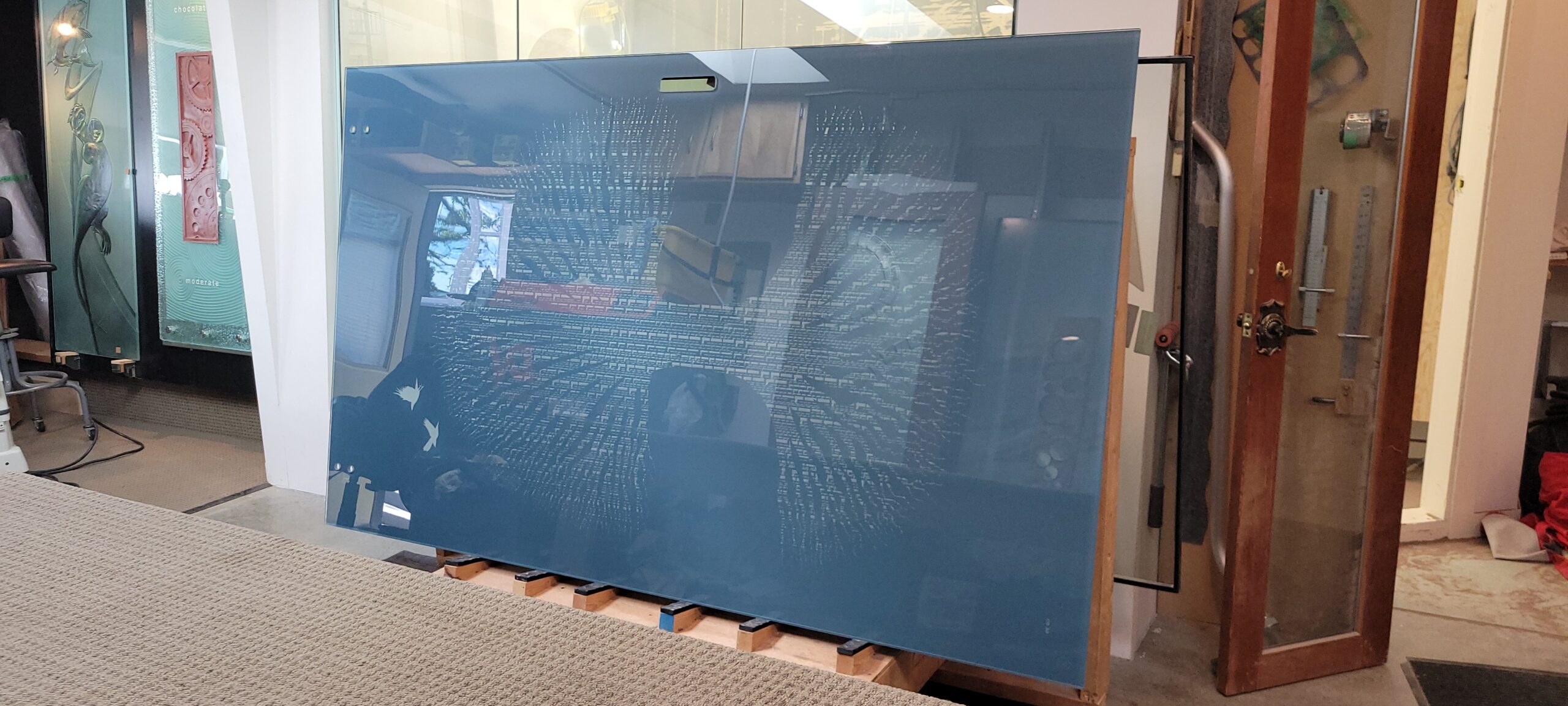
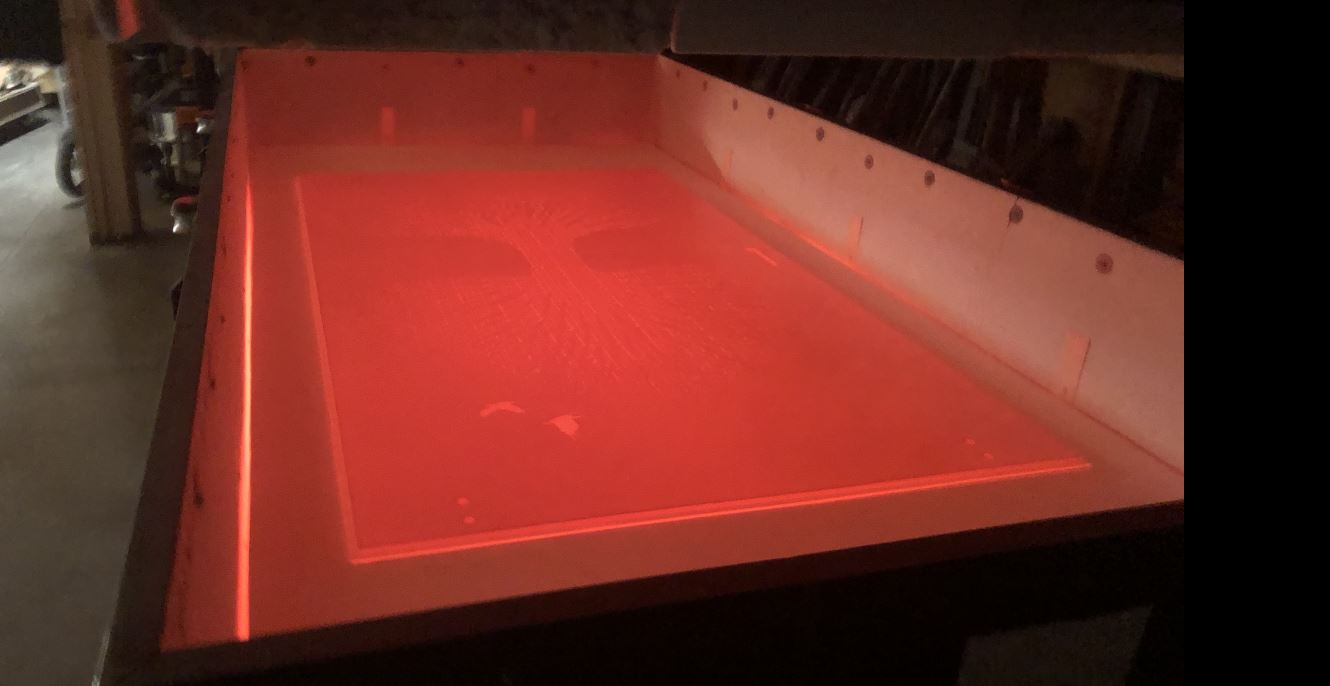
INSTALLED:
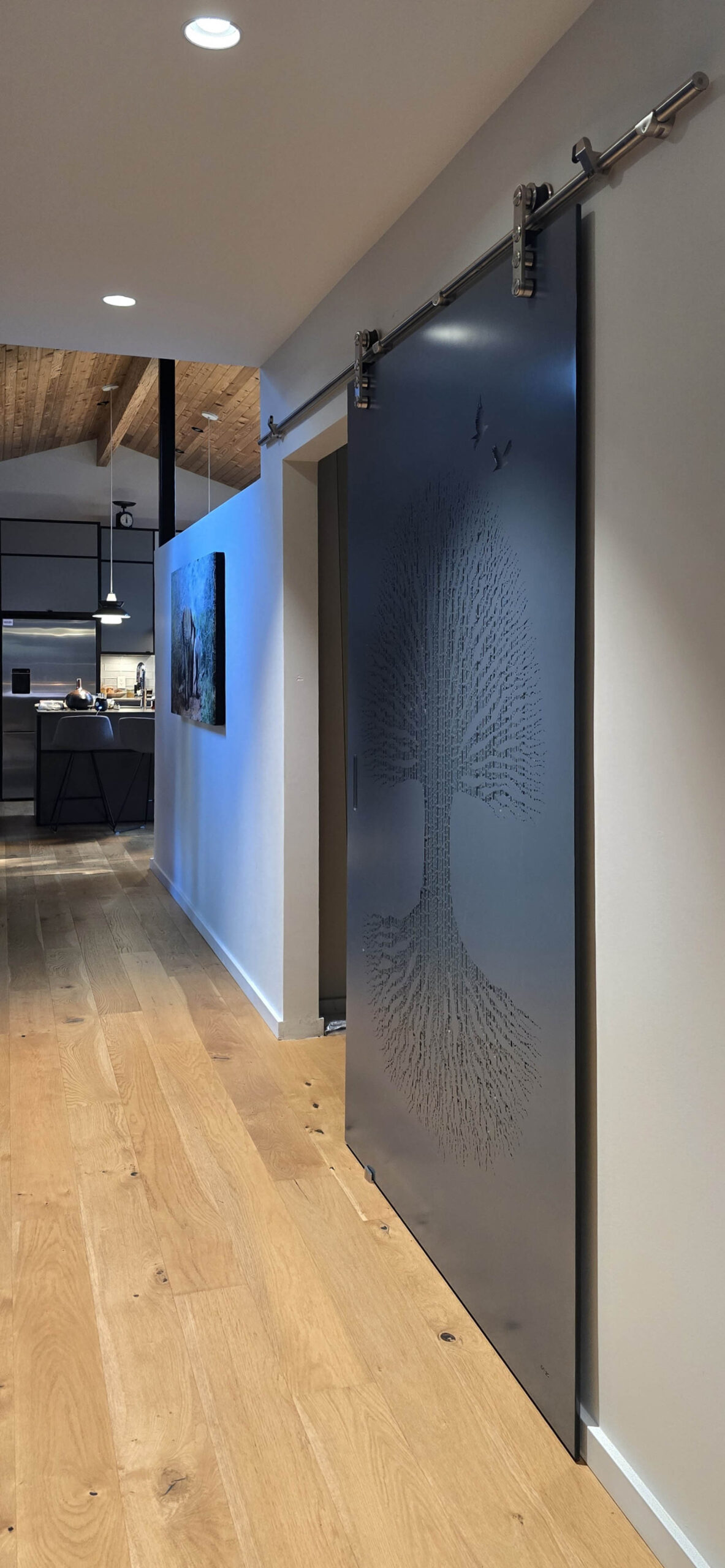
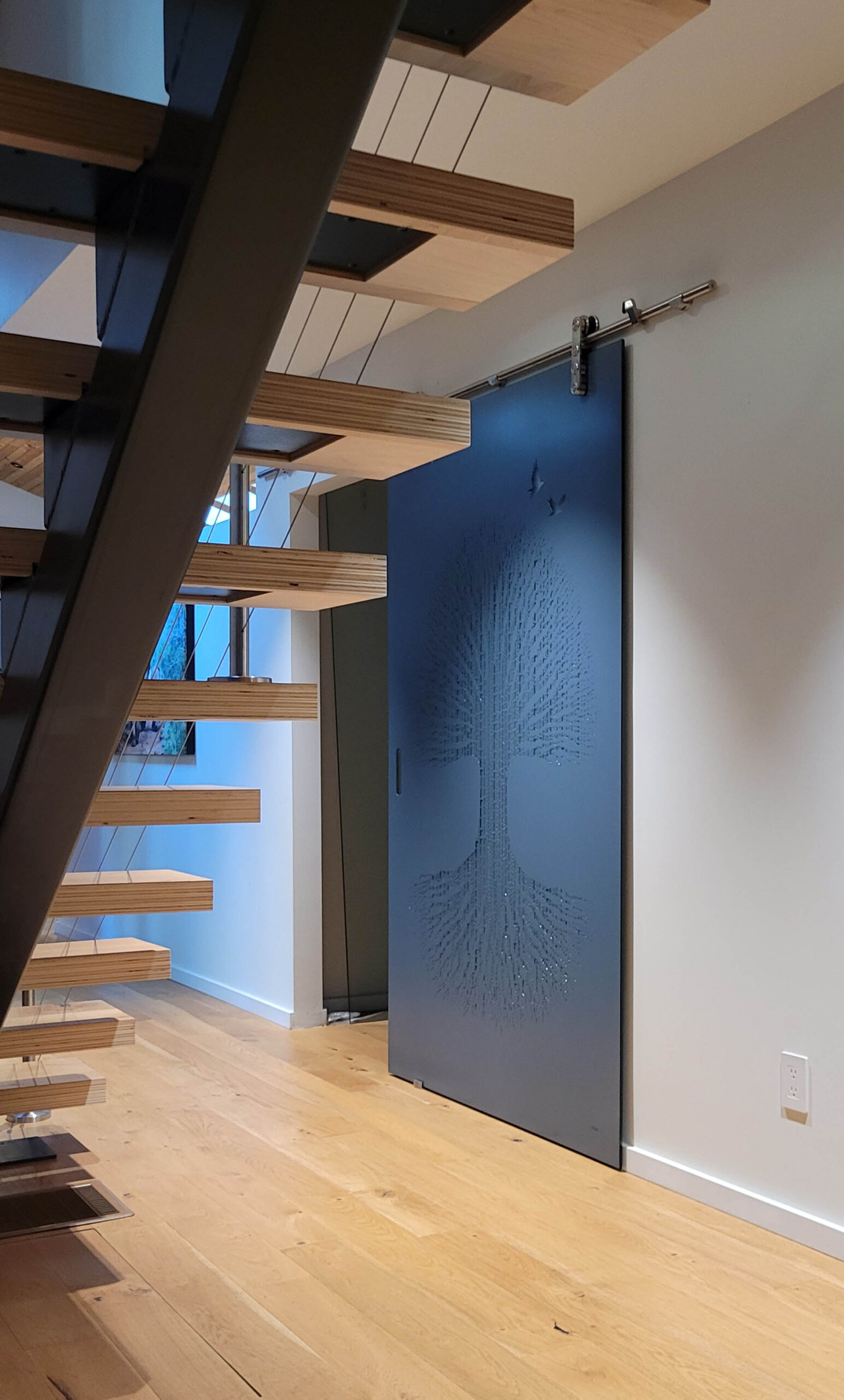
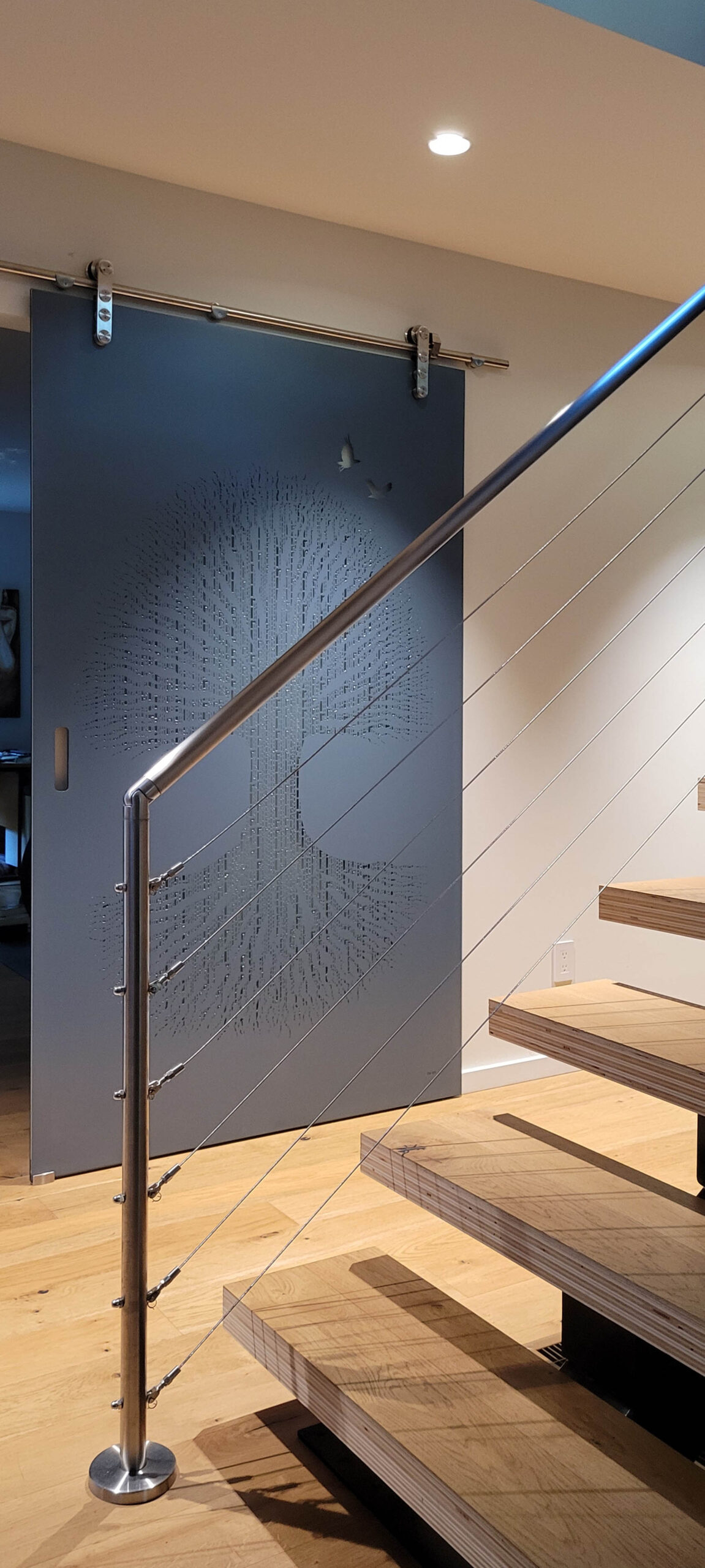
IMHO, ToL 2.25 is an aesthetically strong, yet ambiguous statement that shimmers in situ.
Light play behind the glass is naturally indirect and fluctuates continuously.
Repeating streams of faceted carved text read in a dappled undulating flicker as the viewer moves, or the back light changes.
The image on whole exists in quiet stoic silhouette while made up internally of a life-force in constant flux.
MATERIAL :
- (49″ x 84″) 10mm tempered with SINATRA BLUE FRIT
- kiln-fire: de-temper panel
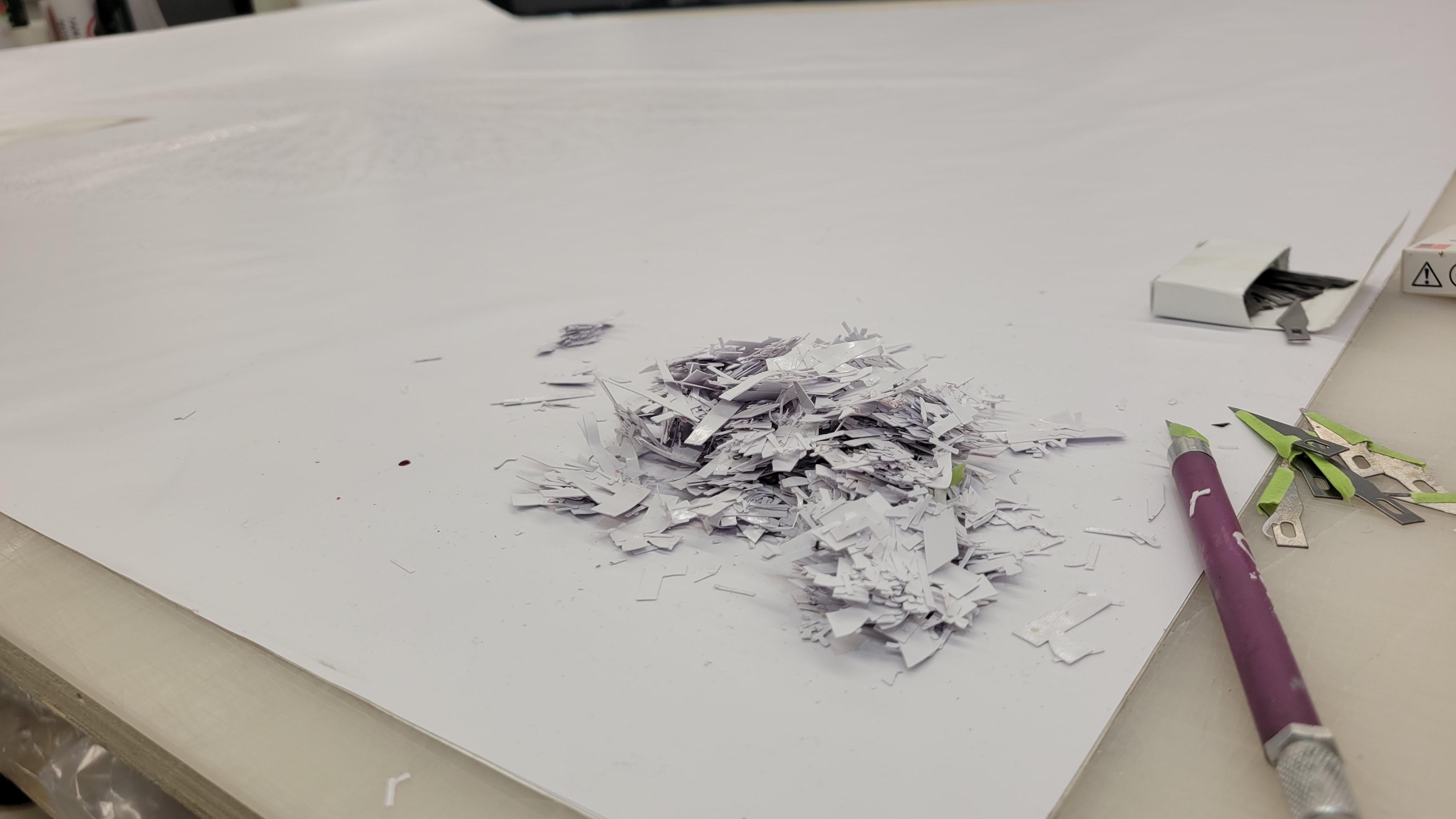
- hand-carve artwork
- kiln-fire: re-vitrify carving & re-anneal panel
- re-temper panel
(Here is a little added background perspective on this specific process…)
Me ‘Glass-plainin’ ToL2.25, a bit:
( – or: “at least one aspect to consider within this project…”) – side notes..
Not to brag, but over the years, I’ve generated a fairly giant list of ways to bugger up a perfectly innocent piece of glass by just putting a ton of effort into it.
By far the heaviest donor to that ignoble tally is catastrophic stress failure.
This occurs near the end of the process but is created via pattern carving – by yours truly – at the beginning of the process.
This doesn’t apply to all designs, obviously, but enough random ones that I now create my rules and boundaries based as much on fear as fact. Well, sort of.
When tempering for example, if you want to put a hole near a corner, in glass that is to be tempered, you can NOT position the hole equi-distance from both edges. It must be offset.
Although I’m not carving holes right through the material, similar issues have arisen around proximity to edges in relation to geometric shapes (mostly sharp angles) and depth of those shapes.
Anyway, I’ve also managed to have pieces fail well into production but long before they even get near a tempering oven, so yeah baby! Mad skills.
In all this time I still don’t have any hard and fast rules but have definitely learned to consider what could happen down the process road when designing.
The process begins with questions like: “Is that pointy shape dangerously close to an edge?” or “ Hey, look at that arc running from one side to another- doesn’t it look like a score line?”.
How’d I learn that, you ask?
(sigh)..🙄
So, back to our recognizable Tree-of- Life image.
First Q: “ Doesn’t that design sort of resemble a breakage pattern…?”
Oh man…!
Challenge accepted. 😉
Physically, my ‘binary-code’ design significantly disrupted the sketchy ‘fracture shape’ of a tree – and increased the chance of success. That was a plus.
Thanks for reading – I hope you enjoyed ! – C
Be First to Comment